It is 3 a.m. A cat is vomiting in your arms, and you rush into an emergency veterinary clinic. When you see the bill—800 USD—you suddenly realize how unprepared you were for pet healthcare costs.
Moments like this are becoming increasingly common.
For many pet owners, what starts as “keeping a pet for companionship” quickly turns into a deeper emotional bond. Pets are no longer just animals—they are family members.
At the same time, social changes such as the rise of single-person households, delayed marriage, and declining birth rates are accelerating the growth of the pet economy. What was once a niche market is now rapidly evolving into a multi-billion-dollar global industry.
Today, we will break down the structure of the pet industry, its future growth potential, and the key trends shaping the next decade.

Current market landscape: A billion-dollar industry still in expansion
The pet industry is already large—but still far from saturated.
By 2025, the pet consumption market in urban China alone has reached approximately 312.6 billion RMB, continuing steady year-on-year growth. The number of pets in urban areas has exceeded 120 million, even surpassing the number of newborns in some regions.
At first glance, this may look like a mature market. In reality, it is still in a strong expansion phase driven by both volume and value growth.
Compared with more developed markets such as the United States and Japan, penetration rates remain relatively low. Pet ownership penetration is around 23.5% in China, while it exceeds 60% in the U.S. This gap alone represents significant future growth potential.
Another key driver is rising per-pet spending. Pet owners are spending more on nutrition, healthcare, grooming, and lifestyle products. In some consumer groups, annual spending per pet has increased significantly, especially among older and higher-income households.
The industry has also formed a complete supply chain covering almost every aspect of a pet’s life cycle:
- Upstream: pet food, accessories, and supplies
- Midstream: veterinary care, grooming, and healthcare services
- Downstream: boarding, funerals, insurance, and even pet travel
Among these, pet food remains the dominant category, accounting for over 50% of total spending. However, the fastest-growing segments are pet healthcare and smart pet products, which are becoming the new growth engines of the industry.
Market outlook: Three long-term forces driving growth
The continued expansion of the pet industry is not a short-term trend. It is supported by three fundamental drivers that are expected to sustain long-term growth.
1. Emotional demand is irreversible
Modern society is experiencing increasing levels of loneliness, especially in urban environments. With more people living alone and traditional family structures changing, pets have become an emotional substitute for companionship.
A large majority of young pet owners report that they are willing to spend significantly on their pets’ emotional well-being. This “emotional economy” is highly resilient and is not easily affected by short-term economic fluctuations.
2. Consumer upgrading is reshaping demand
The core pet-owning demographic is shifting toward younger generations, particularly people aged 25–29. This group tends to be more educated, more digitally connected, and more willing to invest in “scientific pet care.”
As a result, demand is shifting from basic feeding products to more advanced solutions, such as:
- Nutritionally balanced pet food
- Smart feeding and monitoring devices
- Preventive healthcare and regular checkups
- Senior pet care solutions
Social media trends around “scientific pet care” have also gained massive traction, reflecting the growing awareness of pet health and nutrition.
3. Policy improvement and supply chain maturity
Regulatory standards in the pet industry are becoming more structured, particularly in food safety, traceability, and quality control. This is pushing the industry toward more standardized and professional development.
At the same time, domestic manufacturing capabilities are improving rapidly. Strong supply chains and cost advantages are enabling local brands to compete globally, gradually replacing imported products in many categories.
Future trends: Four major directions shaping the industry
As the market matures, competition is shifting from price-based competition to innovation-driven differentiation. Four key trends are emerging:
1. Fresh pet food and niche segments
Fresh and customized pet food is growing rapidly, especially in urban markets. Localized supply models and fast delivery systems are emerging, improving convenience and freshness.
At the same time, non-traditional pets (such as reptiles and small mammals) are gaining popularity, creating entirely new sub-markets with high growth potential.
2. Smart and precision-based pet care
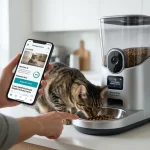
Smart devices are becoming increasingly common in modern households. Products such as automatic feeders, smart litter boxes, and AI-powered monitoring systems are reshaping how people care for pets.
This trend reflects a broader shift toward convenience, automation, and data-driven pet care.
3. Global expansion of local brands
Domestic pet brands are gaining strong momentum due to cost advantages and supply chain efficiency. At the same time, cross-border e-commerce policies are making it easier for pet products to enter international markets.
This is creating strong opportunities for global expansion, particularly in Europe, North America, and Southeast Asia.
4. Diversification of pet services
Pet-related services are expanding far beyond grooming and boarding. New categories such as pet insurance, funeral services, and even cloning-related technologies are emerging.
Pet insurance, in particular, is becoming more mainstream as owners look for financial protection against unexpected medical costs.
Key prediction: The next major growth phase (2027–2028)
Although the pet industry is already growing rapidly, the next major acceleration phase is expected around 2027–2028.
Three key triggers will drive this expansion:
- Penetration rate surpassing 30%
Pet ownership will shift from a niche lifestyle choice to a mainstream behavior. - Industry consolidation and standardization
Stronger brands will emerge as weaker competitors exit, improving overall market quality. - Full scenario integration of pet consumption
Pets will be fully integrated into lifestyle scenarios such as travel, dining, hospitality, and insurance coverage.
If technological breakthroughs in pet healthcare or nutrition occur earlier than expected, this growth phase could accelerate even further.
Conclusion: A long-term emotional economy with structural growth
The pet industry is fundamentally an “emotional economy” supported by long-term demographic and social changes. It is not a temporary trend but a structural shift driven by lifestyle evolution.
While the market offers huge opportunities, it also faces challenges such as competition, standardization, and differentiation pressure.
For businesses, the key is not competing on price, but focusing on high-growth segments such as smart products, fresh food, and premium services.
For consumers, pet ownership is becoming more scientific and more emotionally meaningful.
For investors and industry players, companies with strong R&D capabilities, brand value, and global expansion strategies are likely to outperform in the long run.
The next wave of growth is not a question of “if,” but “when.”
And the answer is becoming increasingly clear: between 2027 and 2028, the pet industry is expected to enter its next major expansion cycle.